
 Business License

Exploring the Butterfly Valve Working Principle and Its Applications in Modern Engineering
Butterfly valves are fundamental components in modern engineering, regulating fluid flow in countless systems. From large-scale industrial plants to municipal water systems, their simple yet effective design provides a reliable method for controlling liquids and gases. Understanding the butterfly valve working principle is essential for any professional involved in fluid dynamics, pipeline design, or system maintenance.
This guide explores the mechanics behind these crucial devices. We will examine their core components, the various types available, and their specific applications across different industries. You will gain a comprehensive understanding of how butterfly valves operate, their advantages over other valve types, and best practices for their installation and maintenance. This knowledge will help you optimize system performance, ensure reliability, and make informed decisions when selecting flow control solutions.
Understanding the Butterfly Valve and Its Working Principle
What is a Butterfly Valve?
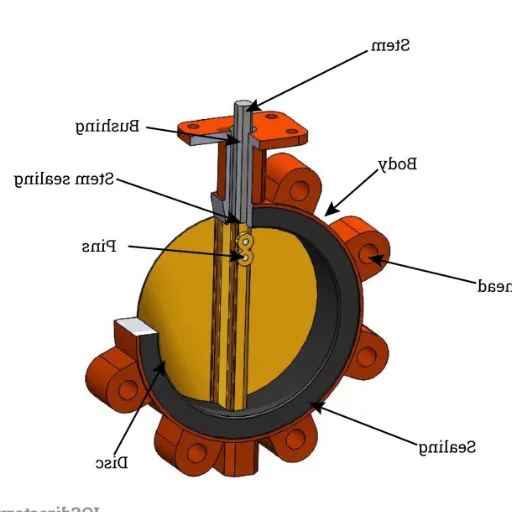
A butterfly valve is distinguished by its primary component: a circular disc mounted on a rotating shaft. This disc, often referred to as the "butterfly," is positioned in the center of the pipe's passageway. When the valve is fully open, the disc rotates a quarter turn (90 degrees) to be parallel with the flow, offering minimal resistance. When closed, the disc rotates back to be perpendicular to the flow, effectively blocking the passageway.
This simple mechanism allows for rapid shut-off, making butterfly valves ideal for both on/off and throttling services. Their compact, lightweight design is another significant advantage, reducing installation costs and space requirements compared to other valve types like gate or globe valves.
How Does a Butterfly Valve Work?
The butterfly valve working principle is based on the rotational movement of its internal disc. An actuator, which can be a manual handle, a gear, or an automated system (electric, pneumatic, or hydraulic), is connected to the valve stem.
Opening the Valve: When the actuator is turned, it rotates the stem. This rotation is transferred to the disc. A 90-degree turn moves the disc from a closed, perpendicular position to an open, parallel position relative to the flow direction. In the fully open state, the fluid or gas can pass through with minimal obstruction.
Closing the Valve: Turning the actuator in the opposite direction rotates the disc back 90 degrees, placing it perpendicular to the flow and sealing against a seat inside the valve body. This action stops the flow through the pipe.
Throttling: The valve can also be partially opened to any angle between 0 and 90 degrees. This allows for the regulation, or throttling, of the flow rate. However, prolonged throttling with certain butterfly valve types can cause disc flutter and wear, so it's important to select the right design for this purpose.
Components of a Butterfly Valve
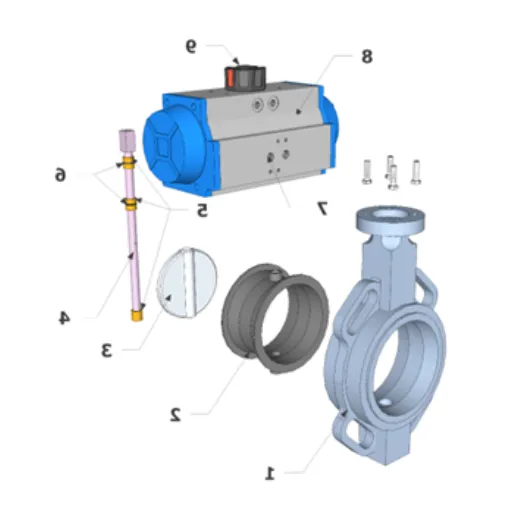
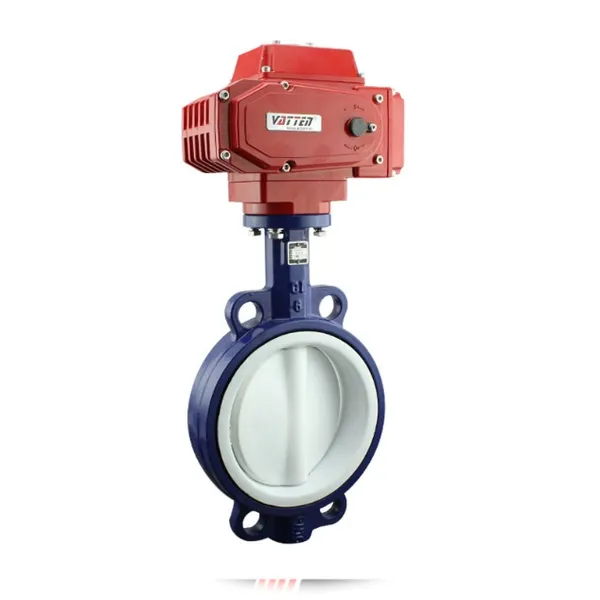
A butterfly valve consists of four main components that work together to control flow:
Body: This is the outer casing of the valve that houses the internal parts. It is designed to fit between two pipe flanges. The body can be a wafer, lug, or flanged type, determining how it connects to the pipeline.
Disc (The "Butterfly"): The disc is the component that controls the flow by opening and closing the passageway. It is mounted on the stem and rotates within the valve body. The material of the disc is chosen based on the fluid's properties, such as its corrosiveness and temperature.
Stem: The stem connects the external actuator to the internal disc. It passes through the disc and is responsible for transmitting the rotational force from the actuator to pivot the disc.
Seat: The seat is a liner made of an elastomeric or metallic material that provides the seal between the disc and the valve body when the valve is closed. The seat's material is critical for ensuring a tight shut-off and preventing leakage. It must be compatible with the fluid and operating temperature.
Types of Butterfly Valves and Their Applications
Different Butterfly Valve Types Explained
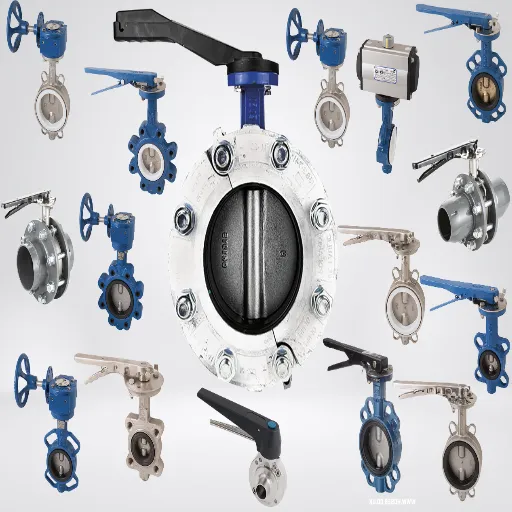
The most common ways to classify butterfly valves are by their connection style and the geometric design of the disc and stem, known as the offset.
Wafer Butterfly Valve vs. Lug Type Butterfly Valve
The connection type dictates how the valve is mounted into a pipeline.
Wafer-Type Butterfly Valve: This is the most common and cost-effective design. The valve body is sandwiched between two pipe flanges, and long bolts or studs pass through the flanges and around the valve body to secure it in place. Wafer valves are lightweight and easy to install but cannot be used for "dead-end" service, where one side of the piping is removed for maintenance.
Lug-Type Butterfly Valve: This design features threaded inserts, or "lugs," around the valve body. These lugs allow bolts to be installed from each side, connecting the valve directly to each pipe flange. This configuration allows for dead-end service, as one side of the piping can be disconnected while the other remains operational. Lug-type valves are generally heavier and more expensive than wafer types.
Double Offset and Triple Offset Butterfly Valves
Offset designs were developed to reduce seat wear and improve sealing capabilities for more demanding applications.
Zero Offset (Concentric): In the basic design, the stem passes through the centerline of the disc, which is centered in the pipe bore. This is often called a resilient-seated butterfly valve, as the disc relies on compressing a soft, elastomeric seat to achieve a seal. These are suitable for low-pressure and low-temperature applications.
Double Offset Butterfly Valve: Also known as a high-performance butterfly valve, this design introduces two offsets. First, the stem is offset from the centerline of the disc seat. Second, the stem is offset from the centerline of the pipe. This geometry creates a camming action as the disc pivots, lifting it off the seat as it opens. This reduces friction and wear, allowing for use in higher-pressure and higher-temperature services.
Triple Offset Butterfly Valve: This advanced design adds a third offset: the axis of the seat contact is offset from the centerline of the stem. This conical sealing design completely eliminates rubbing between the disc and the seat during operation. The seal is created by a metal-to-metal contact, making triple offset valves suitable for critical, high-pressure, and high-temperature applications, including those involving abrasive or corrosive media.
Advantages of Using Butterfly Valves in Engineering
Benefits of Butterfly Valves Over Other Valve Types
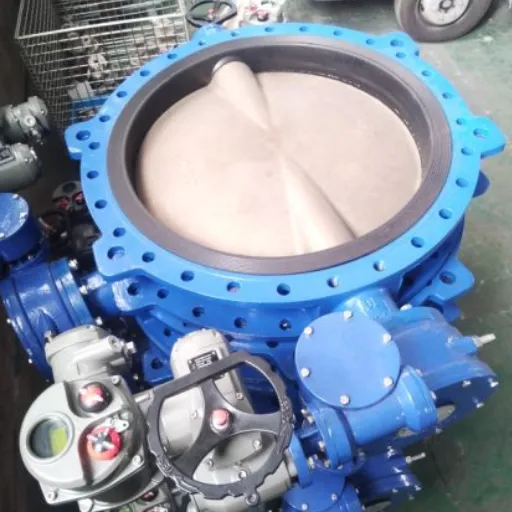
When compared to gate, globe, or ball valves, butterfly valves often come out ahead in several key areas.
Compact and Lightweight: Their slim profile makes them significantly lighter and smaller than other valve types of the same pipe size. This simplifies installation, reduces structural support requirements for the pipeline, and saves space.
Fast Operation: As quarter-turn valves, they can be opened or closed very quickly with just a 90-degree turn of the handle or actuator. This rapid response is critical in emergency shut-off situations.
Low Pressure Drop: In the fully open position, the thin disc presents minimal obstruction to flow, resulting in a lower pressure drop compared to globe valves.
Cost-Effectiveness: Butterfly valves are generally less expensive to manufacture, purchase, and install than other valve types, especially in larger pipe diameters.
Applications in Various Industries
The versatility of butterfly valves allows them to be used across a wide spectrum of industries:
Water and Wastewater Treatment: They are extensively used in municipal water distribution and treatment plants for flow control and isolation due to their reliability and cost-effectiveness.
Chemical Processing: High-performance and triple offset butterfly valves with corrosion-resistant materials are used to handle aggressive chemicals and high temperatures.
HVAC Systems: Their compact size and quick operation make them ideal for controlling the flow of hot and chilled water in commercial and industrial heating, ventilation, and air conditioning systems.
Power Generation: They are used in cooling water systems, flue gas desulfurization, and other utility applications within power plants.
Oil and Gas: Triple offset butterfly valves are particularly suited for critical applications in the oil and gas industry, including upstream production and downstream refining, where high pressures and temperatures are common.
Installation and Maintenance of Butterfly Valves
Installation Guidelines for Butterfly Valves
Correct installation is the first step toward a long service life.
Inspect the Valve: Before installation, check the valve for any damage that may have occurred during shipping. Ensure the disc operates smoothly by rotating it from fully open to fully closed.
Clean the Flanges: The pipe flanges must be clean, free of rust, scale, or other debris. The flange faces should be aligned and parallel to ensure a proper seal.
Position the Valve: For most butterfly valves, the disc should be in a partially open position during installation to prevent the seat from being pinched or damaged by the flanges. Center the valve carefully between the flanges.
Insert and Tighten Bolts: Insert the bolts and tighten them in a crisscross pattern to ensure even pressure distribution. Gradually tighten the bolts to the recommended torque specifications provided by the manufacturer. Over-tightening can damage the valve body or seat.
Verify Operation: After installation, cycle the valve from fully open to fully closed to confirm it operates smoothly and without obstruction.
Common Maintenance Practices
Regular maintenance helps to identify potential issues before they become major problems.
Regular Inspection: Visually inspect the valve for any signs of external leakage, corrosion, or damage to the actuator.
Cycling the Valve: Periodically operate the valve, especially if it remains in one position for long periods. This prevents the disc from seizing and helps clear any sediment that may have accumulated.
Lubrication: For valves with manual gear operators, follow the manufacturer’s recommendations for lubricating the gearbox to ensure smooth operation.
Seat and Seal Replacement: For resilient-seated valves, the seat is a common wear item. If leakage is detected, the seat may need to be replaced. Follow the manufacturer's specific procedures for disassembly and replacement.
Identifying Issues and Troubleshooting
Common problems with butterfly valves often relate to leakage or actuation issues.
Leakage: If the valve is leaking when closed, the seat may be worn or damaged, or the disc may not be closing completely. If leakage occurs around the stem, the stem seals or packing may need to be tightened or replaced.
Difficult Operation: If the valve is difficult to operate, there may be an obstruction in the pipeline, the actuator may be undersized, or the gearbox may require lubrication. Corrosion or sediment buildup can also cause the disc to bind.
By understanding these principles and practices, engineers and technicians can effectively utilize, install, and maintain butterfly valves to ensure efficient and reliable flow control in any system.
Recently Posted
-
Understanding the Functions of Suction Valve and Discharge Valve in Pump Systems
December 18, 2025Industrial pump systems rely on precise mechanical coordination to transport fluids effectively. At the heart of this process are Read More
 -
Exploring Advanced Technologies in Air Compressor Discharge Valve Manufacturing
December 17, 2025The efficiency of any pneumatic system relies heavily on the performance of its smallest components. Among these, the air compress Read More
 -
Exploring Different Discharge Valve Types for Efficient Fluid Flow Management
December 16, 2025Industrial systems rely heavily on precision components to maintain safety, efficiency, and operational integrity. Among these com Read More
 -
How the Discharge Valve AC Affects Performance and Longevity of Cooling Systems
December 15, 2025The efficiency of any air conditioning system relies heavily on the precise coordination of its internal components. While the com Read More

Contact Us
Recommended Products
-
 DN1000 Insertion Type Ultrasonic Flow Meter for Clean Water Pure WaterNegotiableMOQ: 100 Sets
 -
Advanced Electromagnetic Flowmeter With Integrated Liquid Measurement TechnologyNegotiableMOQ: 10 Units
-
High Precision Electromagnetic Flow Meter for Southeast Asia Export - Easy Installation & Reliable After-SaleNegotiableMOQ: 10 Units
-
Advanced Digital Vortex Flow Meter for Accurate Water and Liquid MeasurementNegotiableMOQ: 10 Pieces
-
DN50 304 Stainless Steel Turbine Flowmeter for Diesel Oil MeasurementNegotiableMOQ: 10 Units

-
Low-Temperature Turbine Flowmeter for Liquid Nitrogen Applications in Cryogenic SystemsNegotiableMOQ: 10 Units
-
Industrial UV Disinfection Machine for Food & Beverage Industry - UVTunnelTM Tech, 1-40℃ Working TempNegotiableMOQ: 1 Set
-
C 7635 High-purity Water Conductivity Transmitter With Automatic Temperature Compensation 0-100°CNegotiableMOQ: 1 Set
-
C 3655 Conductivity Meter Output Conductivity Transmitter With IP65 Waterproof HousingNegotiableMOQ: 1 Set
-
High Performance Electric Regulating Valve for Environmental Protection Water Treatment SystemsNegotiableMOQ: 1 Piece


-
High Quality Pneumatic Control Valve for Chemical Pharmaceutical Industry Chinese Strong Factory With Spot StockNegotiableMOQ: 1 Piece
-
Pneumatic or Electric Actuator Compatible Full Fluorine-Lined Butterfly Valve With On/Off and Smart Regulating OptionsNegotiableMOQ: 1 Set
-
Powder Conveying Specialized Pneumatic Y-Type Ball Valve, Full Bore Design With No Dead Space for Clean MediaNegotiableMOQ: 1 Set
-
Manual, Pneumatic, or Electric Flanged Ball Valve With ISO5211 High Platform, Easy 90-Degree Operation for Fluid ControlNegotiableMOQ: 1 Set
-
Zero Leakage Full Fluorine-Lined Butterfly Valve Featuring Superior Corrosion Resistance and Long Service LifeNegotiableMOQ: 1 Set
-
Bottom Discharge Valve VTF-88-3 Series, DN25-DN300, Stainless Steel 316L/Carbon Steel, PN10/PN16 Class 150, Manual or Pneumatic ActuationNegotiableMOQ: 1 Set
-
Cost-Effective Knife Gate Valve With Rigid/Elastic Gate Options - Ensures Tight Shutoff and High Performance in Diverse Industrial SettingsNegotiableMOQ: 1 Set
-
FLS PH/ORP 200 Epoxy Resin Body Glass Bulb Electrode (Single-Junction/Double-Junction Versions)NegotiableMOQ: 100 Pieces
-
FLS F3.20 Flow Sensor Optimized for HVAC Systems, Cooling Units, and Boiler Feed Water, Featuring Low Maintenance and High Precision AccuracyNegotiableMOQ: 100 Pieces
-
FLS F3.80 Oval Gear Flow Sensor – High Precision for High-Viscosity Liquids (10-150L/h, IP65)NegotiableMOQ: 100 Pieces