
 Business License

Understanding the Role of a Discharge Valve Compressor in Industrial Applications
In the realm of industrial machinery, the air compressor is often referred to as the "fourth utility," sitting alongside electricity, water, and gas as a vital power source. However, the efficiency and reliability of any reciprocating compressor rely heavily on a small, precision-engineered component: the discharge valve. While often overlooked due to its internal placement, the discharge valve compressor assembly dictates the thermodynamic efficiency and mechanical integrity of the entire system.
For engineers, plant managers, and technicians, understanding the intricacies of discharge valves is not merely academic; it is essential for operational continuity. A failure in this component leads to reduced output, increased energy consumption, and catastrophic equipment damage. This guide examines the technical function, design considerations, and maintenance requirements of discharge valves in high-pressure industrial applications.
Introduction to Discharge Valves
What is a Discharge Valve?
A discharge valve is essentially a non-return or check valve located at the top of the compressor cylinder. Its primary function is to permit compressed gas to flow out of the cylinder into the discharge line (or the next stage of compression) while preventing that high-pressure gas from flowing back into the cylinder during the suction stroke.
Unlike manually operated valves, compressor valves are automatic. They open and close based solely on the pressure differential across the valve element. When the pressure inside the cylinder exceeds the pressure in the discharge line (plus the force of the valve springs), the valve opens. When the piston retreats and cylinder pressure drops, the valve snaps shut.
Importance of Discharge Valves in Compressors
The operational health of a compressor is directly tied to valve performance. The discharge valve serves three critical purposes:
Maintaining System Pressure: It ensures that once gas is compressed, it moves downstream to the receiver or process, maintaining the required system pressure.
Thermal Management: By preventing the backflow of hot, compressed gas, the valve prevents "re-compression," a phenomenon where gas is compressed multiple times, causing dangerous spikes in temperature.
Energy Efficiency: A leaking or sticky discharge valve forces the motor to work harder to achieve the same output, significantly increasing electrical consumption.
Types of Discharge Valves in Use
Engineers select valve types based on the compressor's speed (RPM), pressure ratios, and the specific gas being compressed. While the core principle remains the same, the mechanical design varies.
Reed Valves:
Commonly found in smaller, high-speed compressors (such as those in HVAC systems or small shop compressors), reed valves consist of thin, flexible strips of metal. They are simple, low-cost, and have low inertia, allowing them to react quickly to rapid piston movements. However, they are generally not suitable for extreme high-pressure industrial applications due to durability concerns.
Plate Valves:
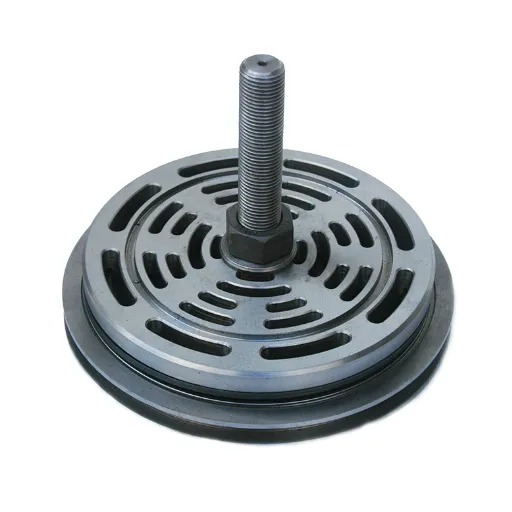
Plate valves are the standard for many industrial reciprocating compressors. They utilize a series of concentric rings (plates) held against a seat by springs. When pressure builds, the entire plate lifts. These are robust and can handle dirty gases better than other designs, making them ideal for oil and gas or chemical processing industries.
Poppet Valves:
Designed for high efficiency, poppet valves use individual aerodynamic elements (poppets) rather than a single plate. Each poppet moves independently. This design offers excellent flow characteristics and resistance to liquid contaminants (slugging). They are frequently used in pipeline transmission and high-pressure injection applications.
Channel Valves:
Channel valves use U-shaped channels that float in slots. When the valve opens, gas flows through the channels. These are known for their durability in heavy-duty, slow-speed air compressors.
Functionality of Compressor Discharge Valves
How Discharge Valves Operate Under High Pressure
The valve operates on a pressure differential ($Delta P$).
The Compression Stroke: As the piston moves upward, the gas inside the cylinder is compressed. The suction valve is closed.
The Opening Event: Once the pressure inside the cylinder rises slightly above the pressure in the discharge manifold, the force of the gas overcomes the spring force holding the valve plate down. The valve opens, and gas is discharged.
The Closing Event: As the piston reaches "Top Dead Center" and begins to reverse direction, flow stops. The pressure equalization, combined with the spring force, snaps the valve shut before the suction stroke begins.
This cycle generates significant impact forces. The valve element must withstand the impact of opening against the guard and closing against the seat, all while enduring high thermal loads.
The Relationship Between Suction and Discharge in Compressors
The discharge valve works in tandem with the suction valve. They operate in direct opposition. During the suction stroke, the cylinder pressure drops below the intake line pressure, opening the suction valve while the high pressure in the discharge line keeps the discharge valve tightly sealed.
If the discharge valve leaks during the suction stroke, high-pressure gas bleeds back into the cylinder. This occupies volume that should have been taken up by fresh intake gas, drastically reducing the compressor's volumetric efficiency.
Key Components of a Discharge Valve System
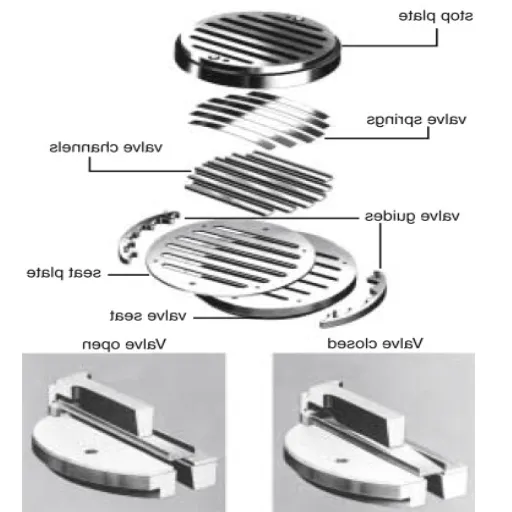
A typical industrial discharge valve assembly consists of four primary components:
The Seat: The stationary part of the valve with ports through which gas flows. It must have a perfectly flat surface to ensure a seal.
The Guard (or Stop Plate): This limits the travel of the moving valve element. It prevents the valve from opening too far and protects the components from over-stressing.
The Sealing Element: The moving part (plate, poppet, or reed) that opens and closes the gas path.
The Springs: These provide the closing force. Proper springing is critical; if springs are too stiff, the valve opens late (power loss). If too soft, the valve closes late (backflow and slamming).
Design and Maintenance of Discharge Valves
Best Practices for Designing Effective Discharge Valves
Modern valve design relies on advanced materials and flow modeling.
Material Selection: Stainless steel is standard, but high-performance polymers like PEEK (Polyether ether ketone) are increasingly used for sealing elements. PEEK offers superior fatigue resistance and handles corrosive gases better than metal.
Lift Optimization: Engineers must calculate the optimal "lift"—the distance the valve opens. Higher lift allows more flow (less pressure drop) but increases impact velocity and wear.
Dead Volume Reduction: The design must minimize "dead volume"—the space within the valve assembly where gas gets trapped and not discharged. Trapped gas expands during the suction stroke, reducing capacity.
Common Issues and Solutions for Maintaining Discharge Valves
Discharge valves are wear items. The most common failure modes include:
Impact Fatigue: Repeated slamming against the seat or guard eventually causes the valve plate to crack or shatter.
Solution: Verify that the compressor is running at the correct speed and pressure conditions. Inspect springs for wear.
Foreign Material Damage: Debris or liquid entering the cylinder can destroy a valve instantly.
Solution: Install proper filtration and scrubbers on the suction side.
Coking (Carbonization): In lubricated compressors, oil can degrade under high heat, forming carbon deposits on the valve. This prevents a tight seal.
Solution: Use high-quality synthetic lubricants and monitor discharge temperatures.
Impact of Proper Maintenance on Air Compressor Performance
Routine maintenance is not optional. A disciplined inspection schedule involves removing valves, cleaning carbon deposits, lapping the valve seats to restore flatness, and replacing springs and sealing elements.
Data suggests that a compressor operating with compromised valves can consume 10-15% more power to do the same amount of work. For an enterprise-level facility running megawatt-class compressors, this inefficiency translates to tens of thousands of dollars in wasted energy annually.
Applications of Discharge Valves in Various Industries
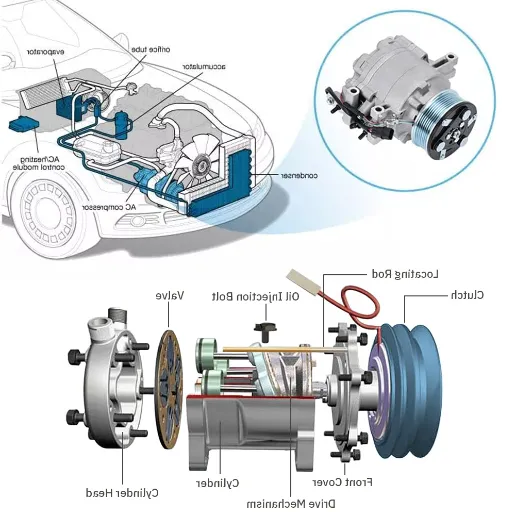
Industrial Applications of Air Compressors and Their Valves
Petrochemical and Refining: Compressors move hydrogen, natural gas, and various hydrocarbons. Valves here must resist sulfur corrosion and extreme pressures (often exceeding 5,000 PSI).
PET Bottle Blowing: This industry requires oil-free, high-pressure air (approx. 40 bar). Discharge valves must operate with zero lubrication, requiring specialized composite materials to prevent friction welding.
Refrigeration: Industrial cold storage relies on ammonia or CO2 compressors. Valves must maintain integrity despite thermal shock and liquid refrigerant carryover.
Case Studies: Successful Implementation of Discharge Valves
Consider a chemical processing plant experiencing frequent unscheduled downtime due to valve failure in their hydrogen compressors. The original steel plate valves were failing due to hydrogen embrittlement and high impact velocities.
By retrofitting the compressors with aerodynamically designed poppet valves made from high-grade polymers, the plant achieved two outcomes. First, the polymer elements were immune to hydrogen attack. Second, the aerodynamic profile reduced the pressure drop across the valve. The result was a 400% increase in Mean Time Between Failures (MTBF) and a 4% reduction in energy consumption.
The Future of Discharge Valve Technology in High-Pressure Systems
Computational Fluid Dynamics (CFD)
Manufacturers no longer rely on trial and error. CFD simulations allow engineers to visualize gas flow through the valve, optimizing geometry to reduce turbulence and flow resistance before a prototype is ever built.
Condition Monitoring
The era of "run to failure" is ending. Smart sensors can now detect the ultrasonic signature of a leaking valve or the vibration pattern of a fluttering valve plate. This integration into the Industrial Internet of Things (IIoT) allows maintenance teams to replace a specific discharge valve before it fails, maximizing uptime.
Recently Posted
-
Understanding the Functions of Suction Valve and Discharge Valve in Pump Systems
December 18, 2025Industrial pump systems rely on precise mechanical coordination to transport fluids effectively. At the heart of this process are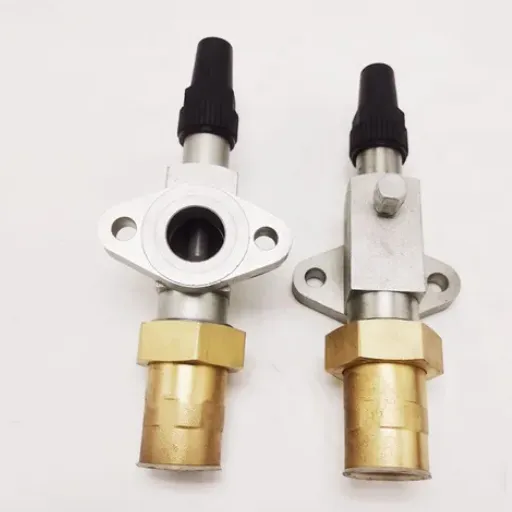 Read More
 -
Exploring Advanced Technologies in Air Compressor Discharge Valve Manufacturing
December 17, 2025The efficiency of any pneumatic system relies heavily on the performance of its smallest components. Among these, the air compress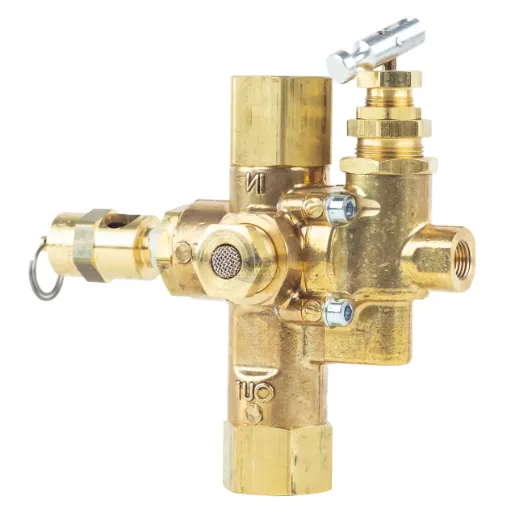 Read More
 -
Exploring Different Discharge Valve Types for Efficient Fluid Flow Management
December 16, 2025Industrial systems rely heavily on precision components to maintain safety, efficiency, and operational integrity. Among these com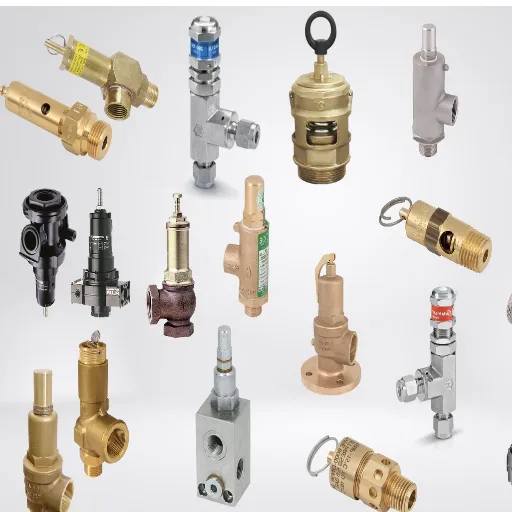 Read More
 -
How the Discharge Valve AC Affects Performance and Longevity of Cooling Systems
December 15, 2025The efficiency of any air conditioning system relies heavily on the precise coordination of its internal components. While the com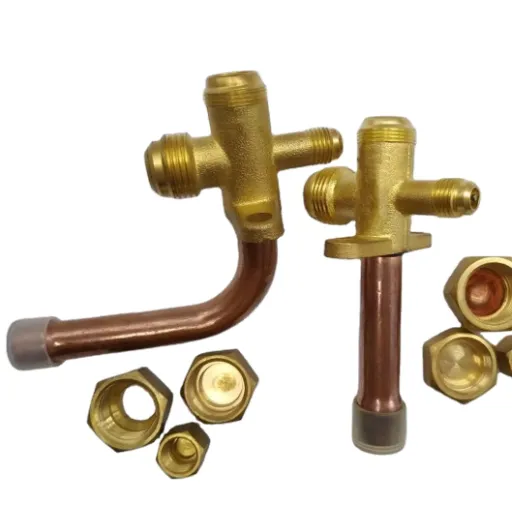 Read More

Contact Us
Recommended Products
-
 DN1000 Insertion Type Ultrasonic Flow Meter for Clean Water Pure WaterNegotiableMOQ: 100 Sets
 -
Advanced Electromagnetic Flowmeter With Integrated Liquid Measurement TechnologyNegotiableMOQ: 10 Units
-
High Precision Electromagnetic Flow Meter for Southeast Asia Export - Easy Installation & Reliable After-SaleNegotiableMOQ: 10 Units
-
Advanced Digital Vortex Flow Meter for Accurate Water and Liquid MeasurementNegotiableMOQ: 10 Pieces
-
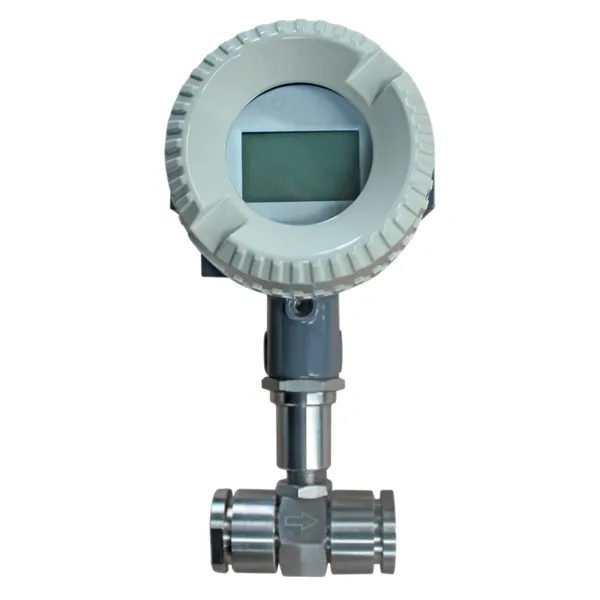
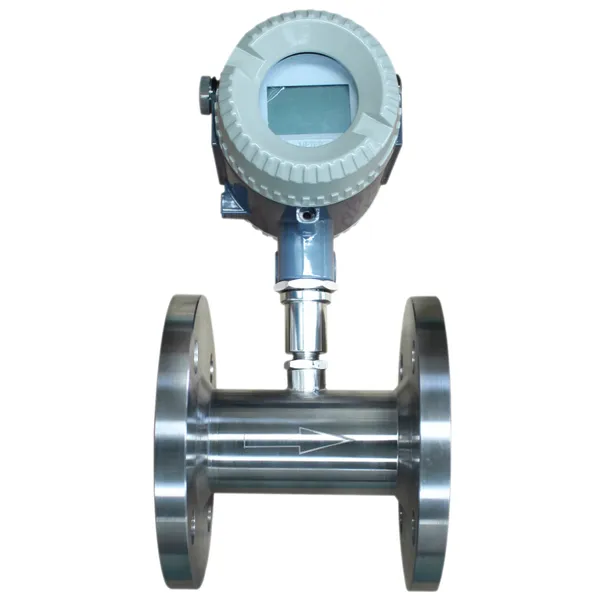
DN50 304 Stainless Steel Turbine Flowmeter for Diesel Oil MeasurementNegotiableMOQ: 10 Units

-
Low-Temperature Turbine Flowmeter for Liquid Nitrogen Applications in Cryogenic SystemsNegotiableMOQ: 10 Units
-
Industrial UV Disinfection Machine for Food & Beverage Industry - UVTunnelTM Tech, 1-40℃ Working TempNegotiableMOQ: 1 Set
-
C 7635 High-purity Water Conductivity Transmitter With Automatic Temperature Compensation 0-100°CNegotiableMOQ: 1 Set
-
C 3655 Conductivity Meter Output Conductivity Transmitter With IP65 Waterproof HousingNegotiableMOQ: 1 Set
-
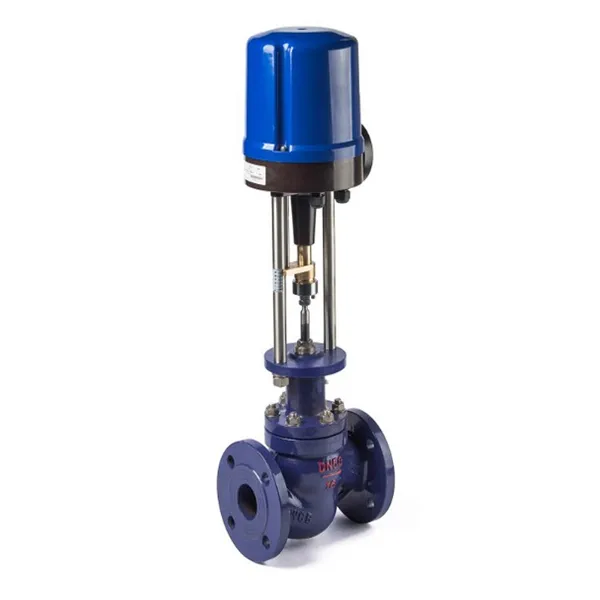
High Performance Electric Regulating Valve for Environmental Protection Water Treatment SystemsNegotiableMOQ: 1 Piece


-
High Quality Pneumatic Control Valve for Chemical Pharmaceutical Industry Chinese Strong Factory With Spot StockNegotiableMOQ: 1 Piece
-
Pneumatic or Electric Actuator Compatible Full Fluorine-Lined Butterfly Valve With On/Off and Smart Regulating OptionsNegotiableMOQ: 1 Set
-
Powder Conveying Specialized Pneumatic Y-Type Ball Valve, Full Bore Design With No Dead Space for Clean MediaNegotiableMOQ: 1 Set
-
Manual, Pneumatic, or Electric Flanged Ball Valve With ISO5211 High Platform, Easy 90-Degree Operation for Fluid ControlNegotiableMOQ: 1 Set
-
Zero Leakage Full Fluorine-Lined Butterfly Valve Featuring Superior Corrosion Resistance and Long Service LifeNegotiableMOQ: 1 Set
-
Bottom Discharge Valve VTF-88-3 Series, DN25-DN300, Stainless Steel 316L/Carbon Steel, PN10/PN16 Class 150, Manual or Pneumatic ActuationNegotiableMOQ: 1 Set
-
Cost-Effective Knife Gate Valve With Rigid/Elastic Gate Options - Ensures Tight Shutoff and High Performance in Diverse Industrial SettingsNegotiableMOQ: 1 Set
-
FLS PH/ORP 200 Epoxy Resin Body Glass Bulb Electrode (Single-Junction/Double-Junction Versions)NegotiableMOQ: 100 Pieces
-
FLS F3.20 Flow Sensor Optimized for HVAC Systems, Cooling Units, and Boiler Feed Water, Featuring Low Maintenance and High Precision AccuracyNegotiableMOQ: 100 Pieces
-
FLS F3.80 Oval Gear Flow Sensor – High Precision for High-Viscosity Liquids (10-150L/h, IP65)NegotiableMOQ: 100 Pieces